
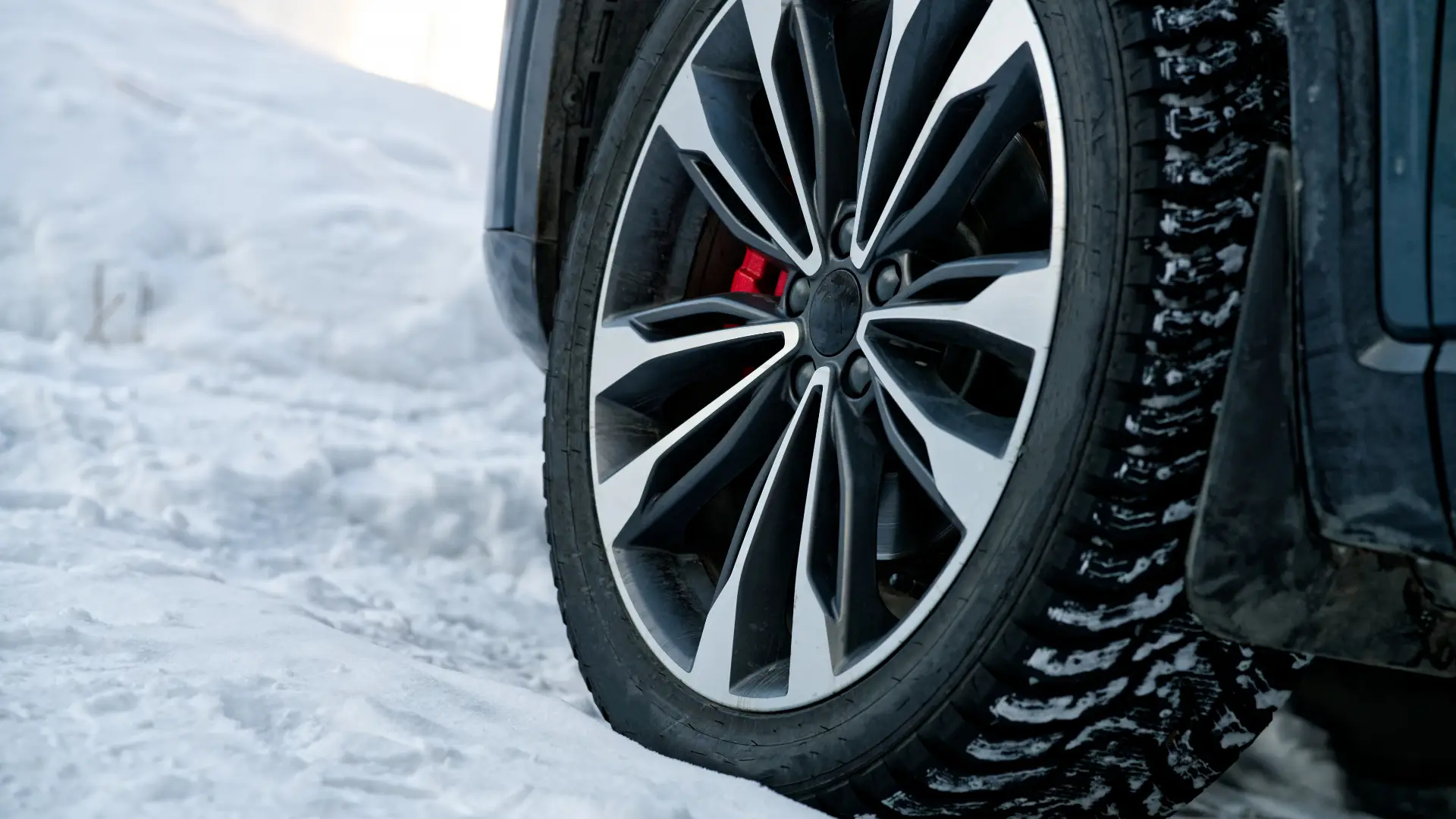
Yes. If you drive an all-wheel-drive vehicle through an Ontario winter, AWD does not replace the need for tires that can grip cold, snowy, slushy and icy roads. If you are asking, “do I need winter tires with AWD?”, the key distinction is simple: AWD can help your vehicle get moving, but the tires provide the grip needed to brake, steer and corner.
That matters on roads that may be dry at one moment and covered in slush, freezing rain or packed snow the next. A capable drivetrain is useful, but it cannot create traction that the tire itself does not have.
AWD Helps With Acceleration, Not Tire Grip
All-wheel drive can send power to more than one axle, which can help a vehicle pull away from a stop when the road is slippery. Depending on the system, power may be distributed automatically as wheel slip is detected or managed continuously between the front and rear axles. That advantage is most noticeable when you are trying to get moving. Every vehicle, including an AWD SUV or crossover, still depends on the four contact patches where the tires meet the road when braking, cornering or making an emergency maneuver.
This is why an AWD badge should not be treated as a substitute for seasonal tire choice. AWD can improve acceleration in snow, but it does not provide the same benefit when braking or turning.
Why Winter Tires Still Matter on an AWD Vehicle
Winter tires are designed for cold conditions. Their rubber compounds are intended to remain more flexible as temperatures fall, while their tread patterns and sipes help manage snow, slush and low-grip surfaces.
Transport Canada advises drivers to look for the Three-Peak Mountain Snowflake symbol when shopping for winter tires. The agency also notes that all-season and summer tires begin losing elasticity below about 7°C, while winter tires are designed to retain grip at lower temperatures.
For an AWD vehicle, the drivetrain and the tires are doing different jobs:
- AWD manages how power is delivered to the wheels.
- Winter tires affect how effectively those wheels can grip the road.
- Brakes slow the wheels, but the tires still have to transfer braking force to the road.
- Steering changes wheel direction, but the tires need enough grip to follow that direction.
That distinction matters on 400-series highways, slushy ramps, icy intersections and residential streets that may be cleared later than major routes.
If your current tires are not suited to the conditions you expect, compare Superior Tire & Auto’s winter tires before the seasonal rush.
AWD With All-Season Tires vs. Winter Tires
An AWD vehicle on all-season tires may accelerate confidently enough to make the driver feel secure, but that does not mean it will have the same braking or cornering grip as a vehicle equipped with winter tires.
The limitation often becomes obvious only when the driver has to brake hard for stopped traffic, turn onto an icy side street or avoid an obstacle. All-season tires cover a broad range of conditions, but they are not the same as dedicated winter tires.
All-weather tires add another option. They are different from conventional all-season tires and may carry the Three-Peak Mountain Snowflake symbol. For some Ontario drivers, a suitable all-weather tire can reduce the need for seasonal swaps. Drivers who regularly face heavier snow, ice or sustained cold may still prefer dedicated winter tires.
The right answer depends on the vehicle, the tire specifications and where and how you drive, not simply whether the vehicle has AWD.
Why You Should Install Winter Tires on All Four Wheels
Winter tires should be installed as a set of four. Mixing winter tires with all-season or summer tires can create a traction imbalance between the front and rear of the vehicle. Transport Canada recommends installing winter tires on all four wheels and using tires with the same type, size, speed rating and load index to help maintain predictable stability.
That advice is especially relevant to AWD vehicles because some systems are sensitive to differences in tire circumference or tread depth. Vehicle manufacturers can also set specific limits for replacement tires.
Before replacing only one or two tires on an AWD vehicle, check the owner’s manual and tire information placard. If one tire is damaged while the others are partly worn, a tire professional can assess whether the remaining tread-depth difference is within the vehicle manufacturer’s limits.
A professional tire installation also provides an opportunity to confirm correct fitment, balancing, wheel condition and TPMS requirements before the vehicle returns to the road.
What to Check When Choosing Winter Tires for an AWD SUV or Crossover
Start with the specifications required by the vehicle manufacturer. The correct tire is not chosen by AWD alone. Check the driver’s door placard and owner’s manual for the original tire size and recommended cold inflation pressure. When selecting a replacement winter tire, confirm the required load capacity and any manufacturer guidance about speed ratings or approved alternative sizes.
Then consider how the vehicle is used. A driver making short urban trips has different priorities from someone commuting long distances on the highway or regularly driving north of the GTA. Snow traction, ice performance, wet-road braking, ride comfort, tread life and road noise can all influence the choice.
If you are buying a separate winter wheel package, confirm wheel diameter, width, offset, bolt pattern, centre bore, brake clearance and TPMS compatibility. A smaller-diameter winter wheel may be possible on some vehicles, but only when the combination is approved for that vehicle and still provides the required load capacity and brake clearance. A lower wheel price is irrelevant if the wheel lacks the required load capacity, brake clearance or correct fitment.
When Should You Put Winter Tires on an AWD Vehicle in Ontario?
Use temperature, not the first snowfall, as the main trigger. A common Canadian guideline is to install winter tires when temperatures are consistently around 7°C or lower.
Waiting for the first major storm can leave you on tires that are already outside their ideal temperature range. It can also put you into the busiest part of the seasonal appointment cycle.
Superior Tire & Auto’s seasonal tire change service can help drivers make the switch before winter conditions arrive.
September is a useful time to inspect the winter tires you already own. Check tread depth, look for cracks, bulges or uneven wear, and inspect stored wheels for corrosion or damage. That gives you time to replace a worn set before colder weather arrives.
Tire Pressure Matters Once Temperatures Drop
Cold weather can reduce tire pressure, so an AWD vehicle that felt normal in early autumn may show a TPMS warning after a sharp overnight temperature drop. Use the vehicle manufacturer’s recommended cold tire pressure shown on the placard, not the maximum pressure printed on the tire sidewall. If you use a dedicated winter wheel set, confirm whether it requires separate TPMS sensors and whether those sensors need to be programmed or relearned.
Superior Tire & Auto also provides TPMS service for drivers dealing with warning lights, sensor issues or seasonal wheel changes.
AWD Is Useful, but the Tire Still Has the Final Say
AWD can make winter driving easier by improving how power reaches the road, especially when pulling away from a stop or climbing a slippery grade. It does not change the amount of grip available between the tire and the road.
For Ontario drivers, AWD and winter tires solve different winter problems. The drivetrain distributes power, while the tires determine the grip available for acceleration, braking and steering.
Before colder weather settles in, check the condition and specifications of your current tires rather than relying on the AWD badge alone. If the set is worn, mismatched or not designed for the winter conditions you routinely encounter, address that before the first difficult drive of the season.
Frequently Asked Questions
Can I put only two winter tires on an AWD vehicle?
A full set of four winter tires is the recommended approach for balanced traction and predictable handling. Mixing tire types between axles can create different grip levels at the front and rear, which can make the vehicle less stable on a slippery road.
Is 4WD better than AWD in snow?
AWD and 4WD systems manage power differently, and either can improve the ability to get moving in low-traction conditions. Neither system can replace the grip provided by the tires when you need to stop or steer.
Can I use all-weather tires instead of winter tires on my AWD SUV?
A suitable all-weather tire can be a practical year-round option for some drivers because qualifying models are designed for winter use as well as warmer seasons. The decision should reflect the severity of your winter driving, your vehicle’s specifications and the performance trade-offs you are comfortable making.
Do AWD vehicles wear tires differently?
Some AWD systems can be more sensitive to differences in tread depth and overall tire circumference than two-wheel-drive vehicles. Regular rotations, correct inflation and replacement practices that follow the vehicle manufacturer’s specifications can help maintain predictable drivetrain operation.
Should I buy separate wheels for my winter tires?
A dedicated winter wheel set can make seasonal changeovers simpler and avoids mounting and demounting the same tires twice each year. The wheels still need the correct fitment, load capacity, brake clearance and TPMS compatibility for your specific vehicle.