
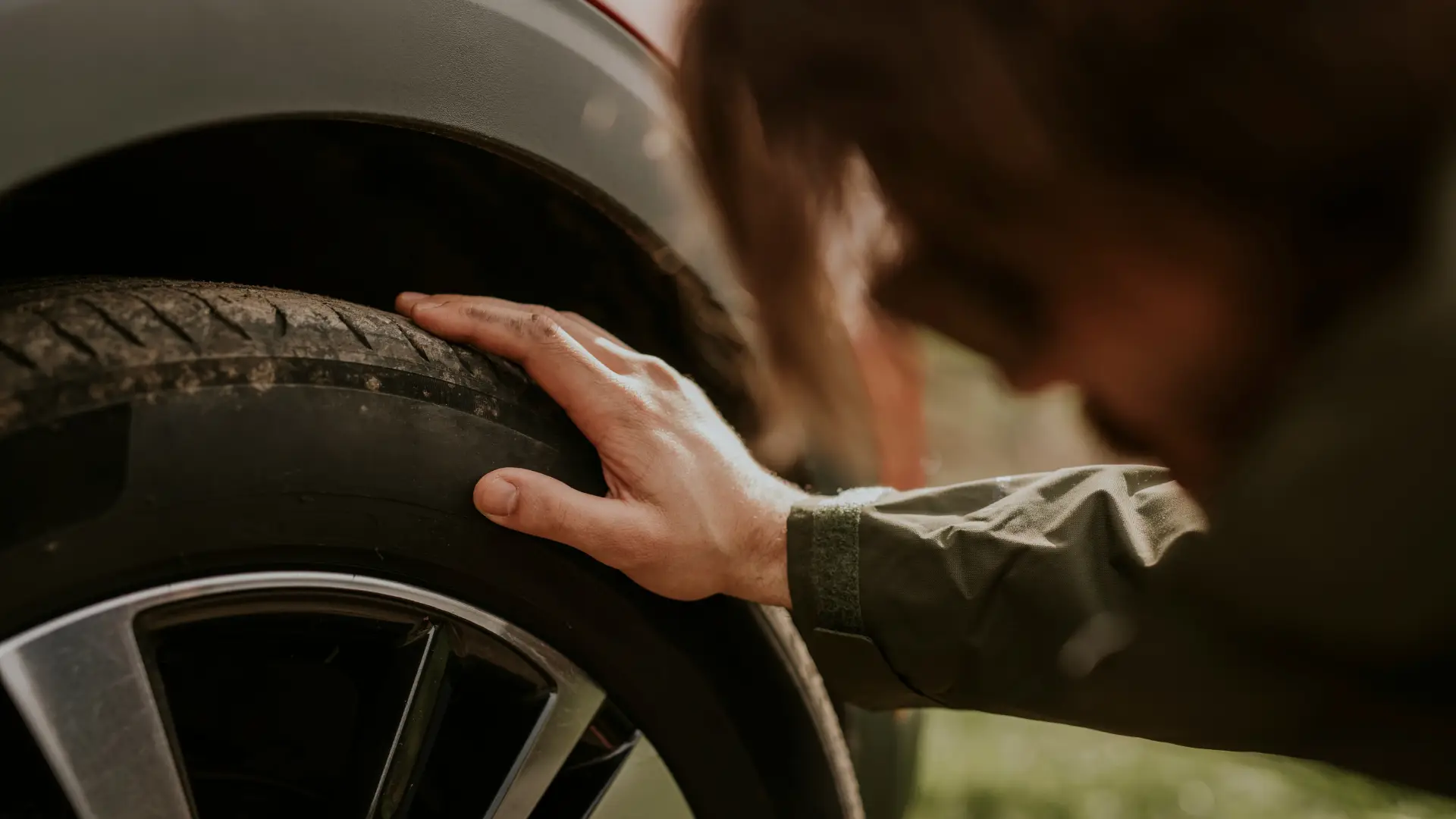
If you have looked at a sidewall and wondered, “how old are my tires?”, the answer is usually printed right on the tire. The last four digits of the DOT tire code show the week and year the tire was manufactured, but age is only one part of the replacement decision. Tread depth, cracks, bulges, uneven wear, pressure loss, vibration, storage conditions and the tire manufacturer’s recommendations all matter too.
A tire can have plenty of visible tread and still deserve a closer inspection because of its age or condition. That makes late summer a practical time to check both the tires on your vehicle and any winter tires that will come out of storage in the months ahead.
How Old Are My Tires? Start With the Date Code
To determine a tire’s age, look for the DOT marking on the sidewall. On tires manufactured since 2000, the final four digits of the full DOT code identify the production date.
The first two digits are the week of manufacture. The last two digits are the year.
For example:
- 3520 means the tire was manufactured in the 35th week of 2020.
- 1124 means the tire was manufactured in the 11th week of 2024.
- 4725 means the tire was manufactured in the 47th week of 2025.
The full DOT code may appear on only one sidewall, so you might need to look at the inside-facing side of the tire if you cannot find the date portion immediately. Michelin Canada confirms that the final four digits identify the manufacturing week and year.
The date code tells you when the tire was made, not when it was installed or purchased. A tire that spent time in inventory before installation can therefore be older than your purchase receipt suggests.
Is Tire Age the Same as Tire Condition?
No. Tire age and tire condition should be considered together.
Tires age differently depending on how they are used, maintained and stored, as well as their exposure to heat, road conditions, inflation problems and long periods of inactivity. Mileage alone does not tell the whole story either. A low-mileage tire can still develop age-related issues, while a younger tire can require replacement early because of damage or severe wear.
Some tire manufacturers recommend more frequent professional inspections once tires reach about five years of service and recommend replacement by ten years from the manufacturing date as a precaution, even when tread remains. Michelin Canada, for example, currently recommends annual professional inspection after five years and replacement at ten years as a precaution. Always check the specific guidance from your tire manufacturer and vehicle manufacturer because recommendations can differ.
Use tire age as a trigger for closer inspection, not as the only pass-or-fail test. Once tires are several years old, inspect them more carefully and pay attention to changes in how the vehicle feels.
Can Tires Be Too Old Even If They Still Have Good Tread?
Yes. Tread depth is essential, but it does not reveal every type of deterioration or damage.
Tires are exposed to repeated heat cycles, road impacts, moisture, sunlight, cold weather and flexing. A tire that has travelled relatively few kilometres may therefore still show signs that call for inspection.
Look for:
- cracks in the sidewall or between tread blocks;
- bulges, blisters or unusual deformation;
- cuts, exposed cords or impact damage;
- repeated pressure loss;
- vibration that was not present before;
- uneven or patchy tread wear; and
- changes in wet-road grip or handling.
Transport Canada advises replacing tires with deep cuts, cracks, blisters or bulges and replacing tread that has worn even with the tread-wear indicators. It also recommends replacing tires before the minimum tread point when better wet or snow traction is needed.
If your tires are showing several of these signs, age becomes one more reason to have them inspected instead of waiting for the tread to look completely worn out.
How Much Tread Is Left?
Tread depth tells you how much usable groove depth remains, but it should be measured rather than guessed.
Most passenger tires have tread-wear indicator bars moulded across the tread grooves. As the surrounding tread wears down toward the same height as those bars, the tire is approaching the end of its usable tread.
A tread-depth gauge provides a clearer measurement across different areas of the tire. Check the inner edge, centre and outer edge instead of measuring in only one spot. A large difference across the tread may indicate an inflation, alignment, balancing or suspension problem.
For winter driving, tread depth matters earlier. Transport Canada advises against using winter tires worn close to 4 mm on snow-covered roads because traction declines as the tread wears. If your stored winter tires are already near that level in August or early fall, planning replacement before the first cold-weather rush can give you more time to choose the right set.
What Does Uneven Wear Tell You?
Uneven wear often tells you that the tire is not the only thing that needs attention.
Wear concentrated on one shoulder can point to an alignment issue. Wear on both outer edges can be associated with underinflation. Centre wear can occur when a tire has been operated with excessive pressure. Cupping or patchy wear can be related to balance or suspension concerns.
The exact cause should be diagnosed rather than assumed from the pattern alone. If you replace an unevenly worn tire without fixing the underlying problem, the replacement can begin wearing the same way.
A six-year-old tire wearing evenly may present a very different maintenance decision from a three-year-old tire with a bulge, exposed cord or severe shoulder wear. Age, condition and wear pattern need to be considered together.
Does Tire Storage Affect How Tires Age?
Storage conditions matter because tires continue to age even when they are off the vehicle.
Seasonal tires should be protected from damaging environmental conditions while they are not being used. Superior Tire & Auto’s tire-storage service uses climate-controlled storage intended to protect off-season tires from temperature fluctuations, moisture and other potential damage.
Before reinstalling seasonal tires, inspect the sidewalls and tread, check the date code, measure tread depth and look for any damage that may have gone unnoticed when the tires were removed.
Superior Tire & Auto offers seasonal tire storage for drivers who would rather keep their off-season set out of the garage and ready for the next changeover.
Do Spare Tires Age Too?
Yes. A spare tire can age even if it has never been driven on.
That is easy to overlook because a spare may spend years in a trunk or mounted underneath a vehicle. Check its DOT date code, inflation pressure and visible condition during regular vehicle maintenance. Tire manufacturers including Michelin recommend considering spare tires in age-based replacement guidance as well.
Compact temporary spares also have specific limits for pressure, speed and driving distance. Those limits vary by vehicle, so follow the label on the spare and the instructions in the owner’s manual.
When Should You Plan to Replace Older Tires?
Plan for replacement when age and condition together indicate that the tire is no longer a good candidate for continued service.
That may include tires with tread at the wear indicators, visible cracks or bulges, recurring pressure loss, significant uneven wear, unrepaired damage, poor wet-weather performance or age beyond the manufacturer’s recommended service life.
If replacement is approaching, you can shop replacement tires by vehicle and compare options before booking. Once you have selected the right tires, professional tire installation helps make sure the new set is mounted, balanced and installed to the vehicle’s requirements.
When the date code raises questions but the tread still looks usable, a technician can compare age, tread depth, wear patterns, tire specifications and visible condition instead of making the decision from the date code alone.
Check Your Tires Before Fall Driving Picks Up
August and early fall are good times to find problems before seasonal tire demand builds.
Check the tires currently on the vehicle after summer highway driving and road trips. If you own a separate winter set, check those tires before you are ready to install them. Finding an old, cracked or low-tread winter tire on the morning of your first changeover appointment leaves very little time to compare replacement options.
If you would like a professional assessment, find a Superior Tire & Auto location near you and have the tires checked before the next season begins.
Frequently Asked Questions
What do the last four numbers on a tire mean?
The final four digits of the full DOT tire code identify the week and year the tire was manufactured. A code ending in 3520, for example, indicates production during the 35th week of 2020.
Are seven-year-old tires still safe if they have good tread?
Age alone cannot confirm whether a seven-year-old tire is safe to keep using. Tires of that age should be assessed for tread depth, cracking, bulges, pressure loss, uneven wear, driving history, storage conditions and the specific replacement guidance from the tire and vehicle manufacturers.
Do winter tires expire if they are only used seasonally?
Winter tires still age while they are stored, even though seasonal use can reduce the number of kilometres they accumulate. Check their DOT date code and condition each season, and remember that winter traction can become inadequate before the tread reaches the minimum wear bars.
Does a spare tire get too old even if it has never been used?
Yes. Spare tires are made from materials that age even when they spend most of their life in storage, so the date code and condition should be checked like any other tire. Follow the tire and vehicle manufacturer’s replacement guidance rather than assuming an unused spare lasts indefinitely.
Should I replace a tire because I see small cracks in the sidewall?
Cracking should be inspected because the significance depends on its location, depth, extent, tire age and overall condition. Deep cracks, exposed material, bulges or other structural damage are stronger signs that the tire should not remain in service.