
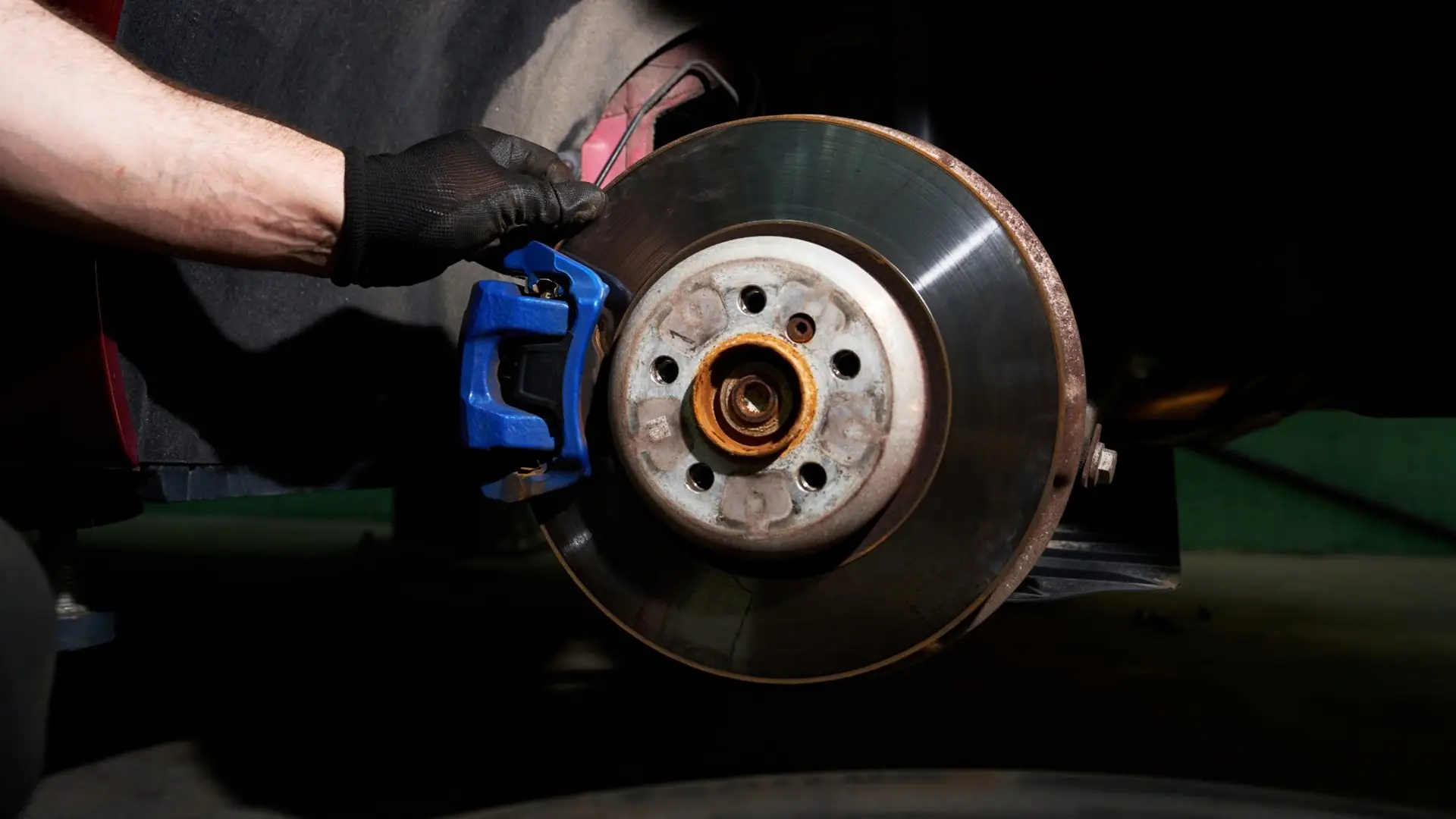
You glance through your wheels and notice an orange coating on your brake rotors. Is it harmless rust from last night’s rain, or a sign your brakes need attention before winter?
The answer depends on more than appearance. A light surface film can develop after moisture exposure, while deeper corrosion, pitting or changes in braking performance deserve a closer look. Even brake pads with plenty of material left cannot tell the whole story.
With November tire changes underway across Ontario, now is a practical time to ask about brake condition. Understanding what a technician checks can help you decide whether your brakes need servicing, replacement or no additional work.
Why Rust on Brake Rotors Develops
Many brake rotors have iron friction surfaces that can oxidise when exposed to moisture. A vehicle parked outside after rain may develop a visible orange film even when its brakes were recently serviced. The rotor turns with the wheel. When you brake, the pads press against its friction surfaces, which is why the swept area can look different from the centre section and outer edge.
Moisture, time parked and exposure conditions influence how quickly rust becomes visible. Rust appearing after a damp night does not, by itself, tell you how much useful life remains. Road salt adds another concern during Ontario winter driving. Its effect is not limited to the visible disc, so an inspection may also need to consider surrounding hardware and other brake components. Toyota Canada identifies moisture and salt as contributors to winter brake corrosion.
Surface Rust and Corrosion Damage Are Different
A thin surface film is different from pitting, heavy scaling or a friction surface that is no longer making proper contact with the pad. The distinction depends on condition and measurement, not simply whether the rotor looks orange.
Light film on the swept surface may clear during normal braking when the braking system is otherwise functioning correctly. That observation should never become advice to drive through grinding, weak stopping or abnormal pedal behaviour.
The centre hat of a rotor and the outer edge are not the same as the friction track. Rust in those areas can look dramatic through an open wheel without proving that the braking surface has failed. A wheel-on photograph also leaves information hidden. The inward-facing friction surface can differ from the outside, and a visible patch does not reveal rotor thickness or caliper movement.
If you are uncertain, request a professional brake inspection rather than trying to diagnose the rotor from its colour.
Why Good Brake Pads Do Not Guarantee Good Rotors
Remaining pad material does not confirm that the rotors or the rest of the brake assembly are in acceptable condition. Pads and rotors have separate condition checks, and the inner and outer pads may not wear equally.
A vehicle can have usable friction material but a rotor with unacceptable corrosion or insufficient thickness. A sticking component can also cause one pad to wear differently from the other. Low mileage does not settle the question either. A lightly used vehicle can spend long periods parked in damp conditions, while an older vehicle’s service history may include previous rotor machining or component replacement.
Ask for the actual findings. “The pads have material left” and “the rotor needs replacement” are not necessarily contradictory statements, but the recommendation should explain what makes replacement necessary. Superior Tire’s overview of other brake warning signs can help you describe symptoms alongside what you see.
What an Inspection Should Check
A brake inspection should assess component condition and operation rather than make a replacement decision from a quick look through the wheel. The appropriate checks depend on the brake design and reported symptoms. A technician may inspect both rotor faces, check the pads and hardware, and measure rotor thickness with a suitable micrometer. The result needs comparison with the applicable service specification.
A rotor’s raised outer lip is not a substitute for measuring the friction area. Where symptoms justify it, additional checks may include thickness variation, lateral runout or further investigation of a pulsation. Brembo’s guidance requires thickness measurements at multiple points and comparison with the rotor’s minimum thickness specification.
The inspection should also consider caliper movement, slide hardware and protective boots where applicable. Cleaning a visible rotor surface will not correct a component that is binding or a brake that is not releasing properly.
Useful questions for the service advisor include:
- Which surface or component is affected?
- What measurement or condition supports the recommendation?
- Are the inner and outer pads wearing evenly?
- Is servicing appropriate, or is a component beyond its usable limit?
- Can photographs show the condition being described?
These questions help you understand the estimate without assuming that every rusty part requires replacement.
When Servicing May Help and When Replacement Is Needed
Servicing may be appropriate when components remain within specification and cleaning or correcting hardware operation addresses the problem. Replacement is appropriate when wear, corrosion or damage makes a component unsuitable for continued use. A brake service and a brake replacement are different jobs. The estimate should identify the work proposed, the parts involved and the reason for each recommendation. Toyota’s maintenance guidance similarly distinguishes components needing service, replacement or no additional maintenance.
Rotor resurfacing is also vehicle- and condition-dependent. Removing material is not automatically suitable, particularly when the remaining thickness would fall outside the applicable limits or the damage cannot be properly corrected. Don’t put oil, grease or rust-prevention spray on braking surfaces. Products intended for bodywork or general corrosion protection can contaminate friction components.
There is no universal treatment that turns every rusty rotor into a sound one. The repair needs to follow the inspection findings and the relevant service procedure.
Symptoms That Need Prompt Attention
Reduced braking, abnormal pedal feel, persistent grinding or a vehicle pulling under braking needs attention regardless of how the rotors look. Visible surface rust should not be used to explain away a change in stopping performance.
If the brake pedal sinks unusually, stopping ability deteriorates or you suspect a serious fault, stop safely and arrange assistance. Do not drive to an appointment simply because the distance is short.
Ongoing scraping, pulsation or repeated noise also deserves assessment. Give the shop specific details about when it happens, such as the first stop after parking, every brake application or only after the vehicle has warmed up.
Do not attempt repeated hard stops on public roads to remove rust or prove the brakes are working. A controlled assessment by a qualified technician is a better way to investigate persistent symptoms.
Use Your November Tire Visit to Ask About Brake Condition
A winter tire visit can be a convenient opportunity to discuss brake concerns, but a complete brake inspection is a separate scope of work. Removing wheels may improve access without automatically including measurement, disassembly or diagnosis.
When arranging your seasonal tire change, mention any rust concerns, noises or changes in braking. Ask whether an inspection can be scheduled and what it includes.
Bring previous brake invoices if you have them. The date and details of earlier work can help the technician interpret present condition, especially when parts were replaced recently.
For drivers using Superior Tire & Auto’s Barrie location, the same approach applies before regular winter trips along Highway 400: describe the concern, request a documented assessment and base the decision on condition rather than appearance.
Frequently Asked Questions
Do coated brake rotors stay rust-free?
Coated rotors can still show corrosion, depending on their design, the coating coverage and operating conditions. Confirm which areas are protected and remember that a coating does not remove the need for normal inspection.
Can I judge rotor condition from a photo?
A photo cannot establish the complete condition of a brake rotor. It may help document a concern, but it cannot replace measurements or show every hidden surface and moving component.
Should brake rotors be replaced in pairs?
Brake rotors are generally replaced as an axle pair to maintain consistent braking characteristics. The technician should follow the vehicle’s repair instructions and assess the associated pads rather than treating each rotor in isolation.
Does a rusty rotor mean my brake fluid needs changing?
Rotor rust does not, by itself, establish that brake fluid needs replacement. Brake fluid maintenance is a separate decision based on the vehicle’s schedule and the applicable inspection or testing procedure.