
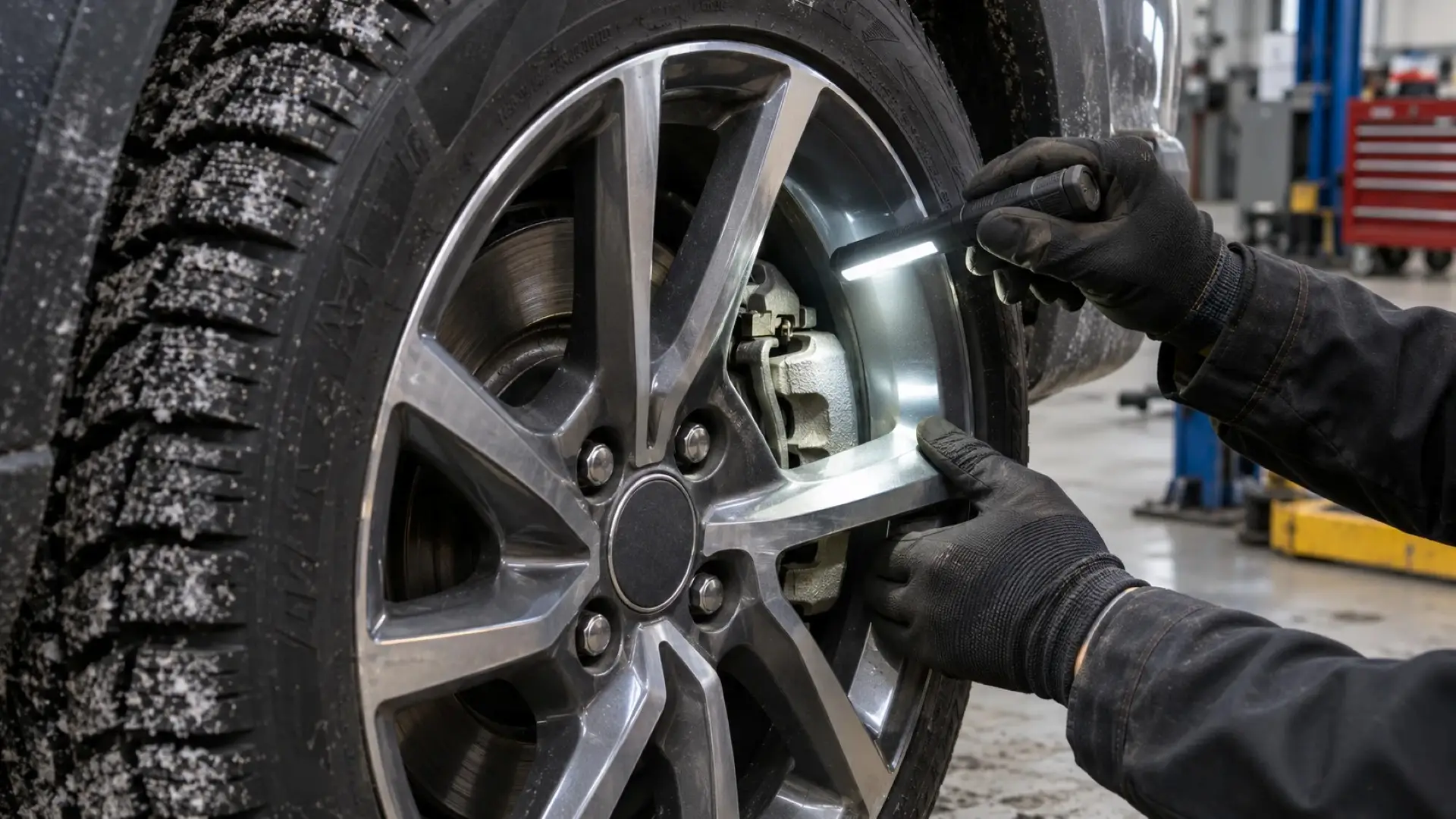
If the price of winter tires for your SUV’s large factory wheels has made you pause, there may be another option: a smaller winter wheel package. But how do you know whether it will fit, and will it actually cost less?
Some vehicles can use smaller wheels paired with winter tires that have taller sidewalls, preserving the required overall tire diameter. The complete package still needs to meet the vehicle’s requirements for brake clearance, load capacity and wheel fitment.
For Ontario drivers shopping in November, this is worth exploring before committing to another set of factory-size tires. Comparing compatible packages, including installation, hardware and any required sensors, will give you a clearer picture of the cost.
What Smaller Wheels for Winter Tires Actually Means
Downsizing changes the wheel diameter without simply shrinking the entire tire assembly. The wheel is the metal component, while the tire’s outside diameter includes both the wheel and the rubber surrounding it. A package using a smaller wheel may compensate with a taller tire sidewall. That keeps the rolling diameter within the vehicle’s approved requirements.
For example, moving from a 19-inch wheel to a 17-inch wheel does not mean the vehicle should sit two inches lower. The tire dimensions must change together. This is an explanation of the concept, not a recommendation that every vehicle with 19-inch wheels can accept a 17-inch package. Start with the owner’s manual and manufacturer guidance. An online calculator can compare dimensions, but it cannot confirm brake clearance, wheel strength or approval for your specific vehicle. Michelin recommends manufacturer-specified tire sizes or approved alternatives.
Why Consider a Smaller Winter Wheel Package?
A smaller approved package may offer a different purchase price and more sidewall between the road and the wheel. The value depends on available products, your vehicle and the complete installed price. A taller sidewall can provide more cushioning when the tire encounters rough pavement. It does not make the tire or wheel immune to pothole damage, and correct pressure remains necessary.
Some approved winter combinations also use a narrower tire. Width is only one part of winter performance, so do not assume the narrowest available tire is the best choice. Tire construction, compound, tread design and the surfaces you drive on all matter. For someone commuting between Barrie and the GTA, the selection should reflect highway use and winter conditions along the route. Someone making shorter trips around Toronto may have different priorities for noise and ride comfort. Both still need a package that fits correctly.
Compare suitable winter tires for your vehicle before choosing a wheel size solely because its tires appear cheaper.
Confirm Fitment for Your Exact Vehicle and Trim
A compatible winter wheel must satisfy more than the correct bolt pattern. Its dimensions, load rating and relationship to the brakes, suspension and body all need to suit the vehicle. Trim level matters. Two vehicles with the same model name and year can have different brake packages. A wheel that clears the brakes on one version may contact the caliper on another.
The key checks include:
- Wheel diameter and width appropriate for the selected tire.
- Bolt pattern, centre bore and offset.
- Wheel and tire load capacity.
- Clearance around brake calipers and suspension components.
- Tire clearance through steering movement and suspension travel.
- Compatible wheel fasteners and mounting hardware.
A larger centre bore may require correctly specified centring hardware for a particular aftermarket design. That does not mean every wheel needs an adapter or ring. Bring the vehicle identification number and mention any aftermarket brakes, spacers or suspension changes. Those details can alter what fits. Do not rely on a seller’s statement that a used package “came off the same model.”
Keep Tire Ratings and Vehicle Systems in the Decision
The replacement package must meet the vehicle’s applicable tire requirements, including load capacity and manufacturer-approved sizing. Matching one measurement does not establish that the complete package is suitable. Tire markings describe width, aspect ratio, wheel diameter and service ratings. A technician needs to consider them together. Vehicles with different factory front and rear sizes also need specific advice rather than an automatic switch to four identical tires.
Overall rolling diameter matters because vehicle systems use wheel-speed information. An unsuitable combination can affect speedometer accuracy and the operation of systems such as ABS and stability control. Ask the shop to explain the proposed size and how it was verified for your vehicle. If winter tire speed-rating guidance differs from the original specification, have the applicable limitations explained before purchase. Load capacity, rolling circumference, approved tire-to-wheel combinations and clearance are established fitment considerations.
Use Superior Tire & Auto’s wheel selection as a starting point, then confirm compatibility before ordering.
Include TPMS and Hardware in the Quote
A second wheel set may need additional tire-pressure monitoring components, depending on the vehicle’s system. The quote should explain what is included rather than leave sensors as an unexpected installation-day expense. Direct TPMS uses sensors associated with the wheels. A dedicated winter package may need compatible sensors and a relearn or programming procedure. Other vehicles use an indirect system that works through wheel-speed information and may require a reset after the change.
Ask about valve components, wheel fasteners and any required centring hardware as well. Reusing existing parts is appropriate only when their condition and specifications suit the new package. A warning light after installation should not automatically be accepted as part of winter driving. Have the cause checked and follow the vehicle’s monitoring-system instructions.
Compare the Total Cost Over Several Seasons
The lowest advertised tire price may not produce the least expensive winter setup. Compare itemised quotes for complete packages and the future changeover services each option needs.
A useful comparison separates:
| Cost Item | What to Confirm |
|---|---|
| Tires | Brand, model, size and required ratings |
| Wheels | Fitment, construction and load capacity |
| Sensors and hardware | Required components and programming |
| Initial installation | Mounting, balancing and installation charges |
| Future changeovers | Complete-wheel swaps versus remounting tires |
| Other charges | Applicable fees, storage and tax |
A dedicated set allows complete wheel assemblies to be swapped rather than removing and remounting tires on the same wheels each season. Future balancing can still be needed when condition or symptoms justify it. Superior Tire’s guide to winter tires with separate rims explains the broader ownership option. Calculate any potential savings using actual quotes, not a promised universal payback period.
Make the Decision Before Your November Appointment
Confirm the package before booking installation, especially if you are choosing a different wheel size or buying used components. Bring your current tire size, vehicle details and any proposed wheel specifications. Tell the shop how long you expect to keep the vehicle and whether you already own usable winter tires. Replacing compatible equipment solely to change wheel size may not make financial sense.
Superior Tire & Auto can help you compare tire and wheel options. Once fitment is confirmed, arrange your seasonal tire change and ask what installation checks and follow-up instructions apply to your package.
Frequently Asked Questions
Can I put my existing winter tires on smaller wheels?
An existing tire can only be mounted on a wheel with the rim diameter specified on its sidewall. A winter tire marked R19 cannot be transferred onto a 17-inch wheel, even if the proposed replacement assembly has a similar outside diameter.
Can I use steel wheels on a vehicle that came with alloys?
Steel wheels can be an option when a compatible design is available for the vehicle. Wheel construction alone does not establish fitment, and some vehicles or brake packages restrict the available choices.
Does downsizing change my vehicle’s ground clearance?
An approved alternative that preserves the required overall tire diameter should keep ground clearance broadly comparable. Nominal tire dimensions are not identical to measured loaded dimensions, so ask the shop about the specific proposed combination.
Can I keep the winter package when I replace my vehicle?
A winter package can transfer only if its tires, wheels, ratings and associated components suit the replacement vehicle. Confirm compatibility before including that package in your plans, even when the next vehicle is the same brand.