
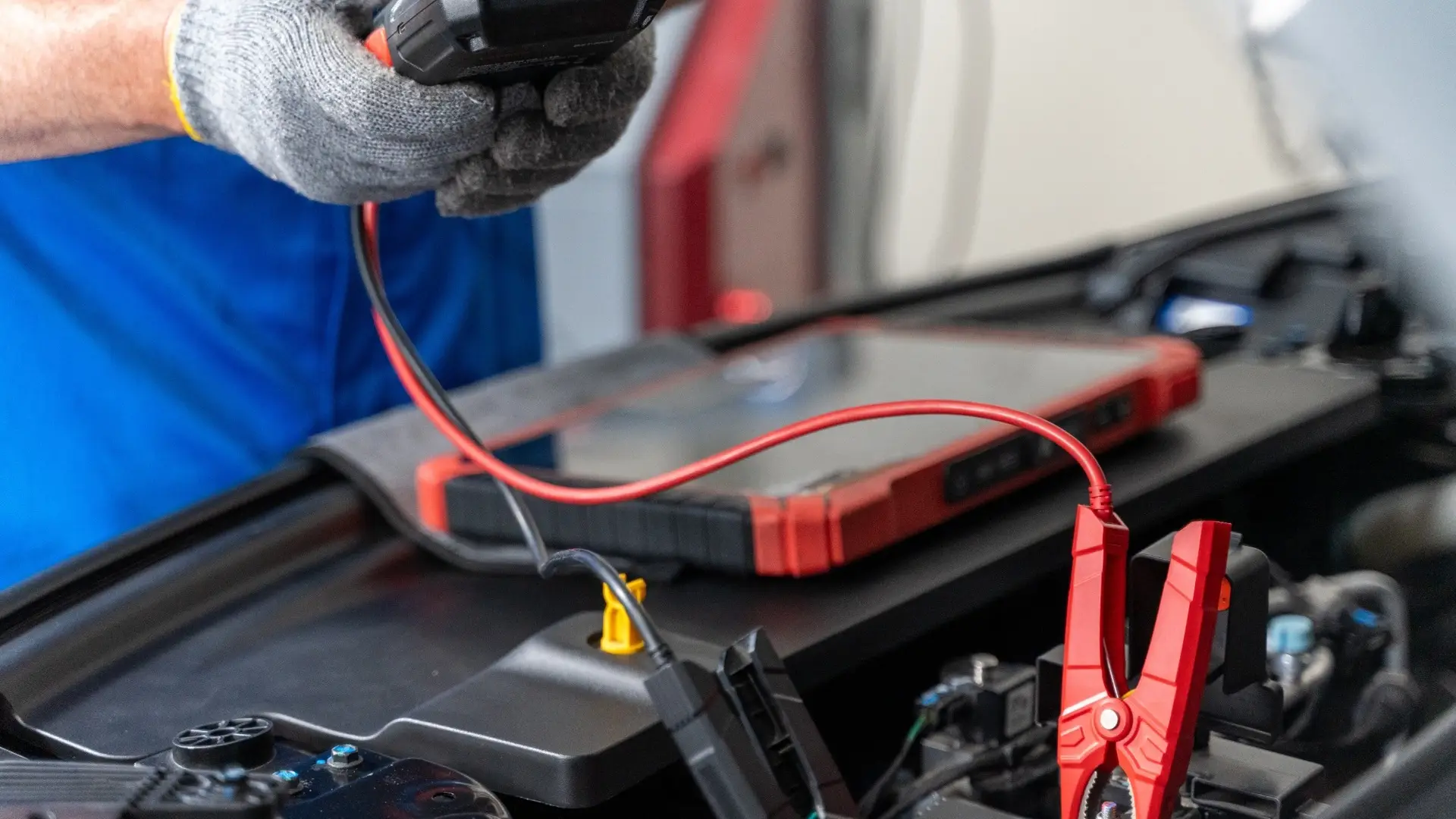
When your car won’t start in cold weather, a weak battery is one of the most common possible causes, but it is not the only explanation. A failing alternator, corroded battery connection, starter motor problem or other electrical fault can produce similar symptoms. The best way to identify the problem is to check the battery’s condition and determine whether the charging and starting systems are working correctly.
For Ontario drivers, October is a practical time to address slow starts and other warning signs before overnight temperatures drop further. A battery that starts your vehicle normally in September may struggle during a freezing morning in December. Recognizing the symptoms early can help you avoid an unexpected no-start situation.
Why Car Batteries Struggle More in Cold Weather
Cold temperatures reduce a conventional lead-acid battery’s ability to deliver electrical energy while increasing the effort required to crank a cold engine. Inside the battery, chemical reactions produce the electricity needed to power the starter motor. As temperatures fall, those reactions become less efficient.
At the same time, cold engine oil becomes more resistant to movement, increasing the effort needed to turn the engine during startup.
A healthy, properly charged battery is designed to operate across a range of temperatures. However, an older or weakened battery may no longer have enough reserve capacity to handle the additional demand. That explains why some vehicles start normally during mild autumn weather but struggle during the first substantial cold spell.
What Are Cold Cranking Amps?
Cold Cranking Amps, or CCA, measure a battery’s ability to deliver starting current at a specified low temperature. A battery’s required CCA rating depends on the vehicle, engine and manufacturer’s specifications.
When replacing a battery, choosing one that meets the vehicle’s requirements is more important than simply selecting the battery with the highest advertised rating. Using an unsuitable battery can create compatibility or electrical problems, particularly in vehicles with advanced start-stop or battery-management systems.
Early Warning Signs of a Weak Car Battery
A failing battery often provides warning signs before it stops working completely.
Common symptoms include:
Slow engine cranking
The engine turns over more slowly than usual when you turn the key or press the start button. This can indicate that the battery is struggling to deliver enough current.
Repeated clicking when starting
Rapid clicking may occur when there is insufficient electrical power to operate the starter properly. However, faulty connections and starter problems can cause similar symptoms.
Dim headlights or interior lights
Lights that appear unusually dim before the engine starts may indicate low battery voltage or another electrical problem.
An unexplained need for boosting
If your vehicle repeatedly requires a boost, the battery may not be holding a charge, or the charging system may not be replenishing it correctly.
Visible corrosion around battery terminals
Corrosion can interfere with electrical connections. It does not automatically mean the battery has failed, but it should be addressed.
A single symptom does not confirm that a battery needs replacing. Testing is the most reliable way to distinguish battery deterioration from related electrical faults.
Battery or Alternator: How Can You Tell the Difference?
The battery and alternator perform different jobs, but a problem with either can leave a vehicle unable to start. In a conventional gasoline-powered vehicle, the battery supplies the electrical power needed for starting. Once the engine is running, the alternator supplies electricity to the vehicle’s electrical systems and replenishes the battery.
If the alternator cannot maintain adequate charging voltage, the battery may eventually become discharged, even if the battery itself is in good condition.
The following symptoms can help identify where testing should begin.
| Symptom | Possible Explanation |
| Slow cranking on a cold morning | Weak battery, poor connection or starting-system problem |
| Rapid clicking without starting | Low available voltage, connection problem or starter issue |
| Battery warning light while driving | Charging-system fault or related electrical issue |
| Vehicle starts after a boost but later dies | Possible charging-system failure or another electrical fault |
| Battery goes flat after sitting overnight | Battery deterioration, parasitic drain or charging issue |
| Lights flicker while the engine is running | Possible charging-system or electrical connection problem |
These are possible causes, not a substitute for diagnosis.
Signs That Point Toward a Battery Problem
Battery issues often become noticeable when the vehicle has been parked for several hours. A slow start after a cold night, particularly when the battery is several years old, can be a warning sign.
A battery can also become discharged because of short trips, lights or accessories left on, or an electrical component drawing power while the vehicle is parked.
Signs That Point Toward an Alternator Problem
Alternator problems may become noticeable while the engine is running. Possible signs include the battery warning light, unusual electrical behaviour or a vehicle that loses electrical power while driving.
An alternator fault can also leave the battery undercharged, eventually preventing the next start. Because the symptoms overlap, the condition of both components should be assessed before replacing either one. Superior Tire & Auto provides car battery testing and charging-system services to help identify the underlying cause.
Why Your Car Clicks or Cranks Slowly Without Starting
The sound your vehicle makes during a starting attempt can provide useful diagnostic information.
Rapid Clicking
Repeated clicking can occur when there is enough electrical power to activate a relay or solenoid but not enough to turn the starter motor. Low battery charge is a common possibility, although loose connections and starter problems must also be considered.
One Loud Click
A single click without engine cranking can indicate a starter motor or starter-solenoid problem. However, battery condition and electrical connections should still be checked before assuming the starter requires replacement.
Slow Cranking
If the engine turns over but noticeably slower than normal, the battery may be weak or insufficiently charged. Cold temperatures can make this symptom more obvious because of the additional starting demand.
Normal Cranking Without Starting
If the engine cranks at its usual speed but does not start, the problem may involve fuel delivery, ignition, sensors or another engine-management component. This type of no-start problem requires a different diagnostic approach from a battery that cannot crank the engine. A professional automotive diagnostic inspection can help narrow down the possibilities.
How Long Does a Car Battery Usually Last in Ontario?
Many conventional automotive batteries last approximately three to five years, although actual lifespan varies. Driving habits, temperature exposure, charging performance, battery quality and vehicle electrical demands can all affect service life.
Drivers who make frequent short trips may encounter battery problems sooner because the alternator has less time to replenish energy used during starting. For example, a vehicle used mainly for short errands around Toronto or Mississauga may experience a different charging pattern than one driven regularly on longer highway commutes.
Longer trips do not guarantee that a weak battery will recover, particularly if it has deteriorated internally.
Should You Replace a Three-Year-Old Battery?
Not necessarily. A three-year-old battery that tests well, starts normally and shows no signs of deterioration may continue operating reliably. However, if your battery is already several years old and cranking noticeably slower, testing before winter is a sensible precaution.
Replacing a battery solely because it has reached a particular age can result in unnecessary expense. Condition-based testing provides a better basis for the decision.
What Happens During a Professional Battery and Charging-System Test?
A proper battery inspection evaluates more than whether the vehicle can start at that moment. Depending on the vehicle and the symptoms, testing may include several checks.
Battery voltage
Voltage measurement helps assess the battery’s state of charge. A low reading does not automatically establish that the battery is defective.
Battery condition and starting capacity
A battery tester can evaluate electrical characteristics and provide information about the battery’s ability to supply starting current.
Charging-system performance
The alternator’s output and charging behaviour may be checked while the engine is running, using procedures appropriate for the vehicle.
Battery terminals and cables
Connections are inspected for looseness, corrosion, damage or excessive electrical resistance.
Parasitic electrical draw
If the battery repeatedly becomes discharged while parked, additional testing may be needed to identify whether an electrical component is drawing excessive current when the vehicle is off.
Starter-system testing
If the battery is healthy but the engine still cranks slowly or fails to crank, the starter motor and associated electrical circuits may require investigation.
Modern vehicles can have sophisticated charging systems that vary their output depending on operating conditions. A charging voltage reading alone may not tell the full story. The goal is to identify the underlying fault rather than replace parts based only on symptoms.
What Should You Do if Your Car Won’t Start?
If your vehicle fails to start, begin with a few basic observations. Check whether the dashboard lights turn on normally. Listen for clicking, slow cranking or normal cranking without ignition. Note whether the vehicle displayed any warning lights during its last drive.
If your vehicle uses a conventional 12-volt battery, boosting may be possible when the battery is discharged. Always follow the manufacturer’s jump-starting instructions. Incorrect boosting procedures can damage electrical components or cause injury.
Do not attempt to jump-start a visibly damaged, leaking or frozen battery. Hybrid and electric vehicles can also have specific procedures and designated connection points. If the vehicle starts after a boost, that does not prove the battery is the only problem. If the battery warning light remains illuminated while driving, or the vehicle develops electrical problems, arrange appropriate assistance rather than assuming it is safe to continue.
A charging-system fault may cause the vehicle to stall again.
When Should You Book a Battery Inspection Before Winter?
Book a battery inspection when you notice slow cranking, repeated boosting, intermittent starting problems or unusual electrical behaviour. You should also consider testing if the battery is several years old and you depend on your vehicle for regular commuting or long-distance driving.
CAA recommends paying particular attention to older batteries when preparing for winter. Checking battery condition before sustained freezing temperatures can help identify a developing problem. October is a convenient time for many Ontario drivers to arrange an inspection alongside other seasonal maintenance.
If you’re already scheduling a winter tire change, ask whether battery testing can be arranged during the same visit.
Superior Tire & Auto offers automotive battery and maintenance services across its network. You can find a nearby Superior Tire & Auto location or schedule an appointment to have a starting problem assessed.
Frequently Asked Questions
Can cold weather kill a car battery overnight?
Cold weather can expose an already weakened battery by reducing the electrical power available for starting. A battery that is healthy and fully charged is generally better equipped to handle cold temperatures than one that is deteriorated or undercharged.
How do I know whether my battery or alternator is failing?
A battery problem may appear mainly during starting, while a charging-system problem can also produce warning lights or electrical problems with the engine running. Because these symptoms overlap, battery and charging-system testing is needed to identify the cause reliably.
Will driving recharge a weak car battery?
Driving may replenish some battery charge when the alternator and charging system are operating normally. However, a deteriorated battery may not regain reliable starting capacity, and repeated short trips may not restore sufficient charge.
Why does my car start in warm weather but struggle when it is cold?
Cold temperatures reduce the starting power available from a conventional lead-acid battery while increasing the effort needed to crank the engine. A battery with reduced reserve capacity may therefore work in mild weather but struggle when temperatures fall.
Should I replace my car battery before winter?
Replacement is appropriate when testing confirms the battery can no longer perform reliably or when damage requires replacement. If your battery is older or showing symptoms, testing before winter can help you avoid replacing a battery unnecessarily.
Prepare Your Vehicle Before Cold Weather Arrives
A vehicle that struggles to start is providing a warning worth investigating before temperatures fall further. Battery testing, electrical connection checks and charging-system evaluation can help distinguish a failing battery from an alternator or starter problem.
Superior Tire & Auto can help assess your vehicle’s starting and charging system so you can make an informed repair decision before winter driving begins.