
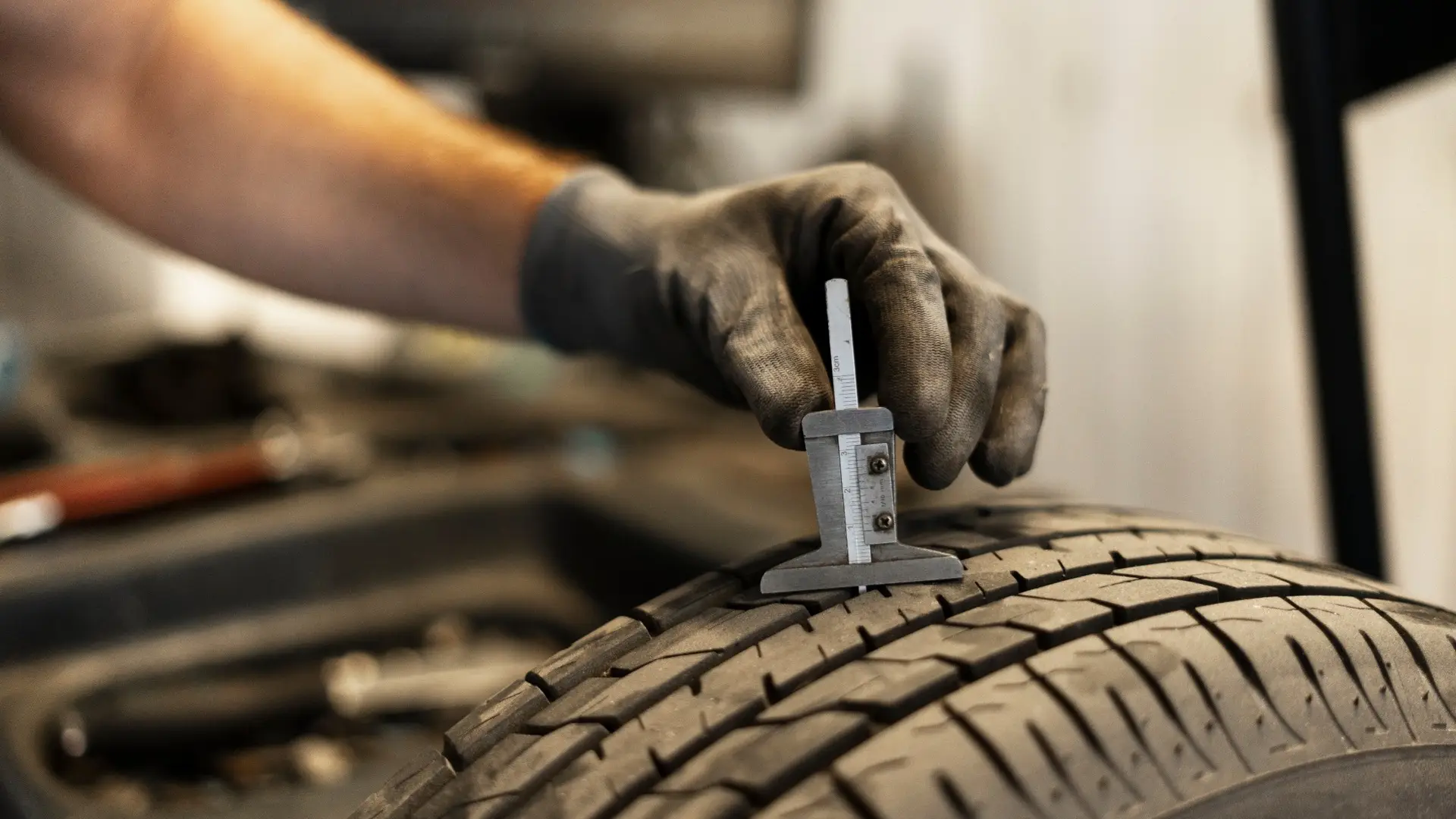
Winter tires should be inspected before every seasonal installation, even if they performed well the previous winter. Winter tire tread depth, age, visible damage and uneven wear all help determine whether a tire is suitable for another season. A tire that looks acceptable from a distance may have worn grooves, sidewall damage or deterioration that affects its performance on cold, snowy roads.
October is an ideal time for Ontario drivers to check their winter tires before booking an installation. Catching a problem early allows time to arrange an inspection or select suitable replacements before the first significant snowfall.
How Much Winter Tire Tread Depth Do You Need?
For reliable winter traction, the depth of your tire’s tread matters because the grooves must be able to move snow, slush and water away from the contact area.
New winter tires generally have substantially deeper tread than tires approaching the end of their useful winter service life. As the tread wears down, the tire becomes less effective at managing loose snow and slush.
Transport Canada advises against using tires worn close to 4 mm (5/32 inch) on snow-covered roads. This is a practical winter-performance guideline rather than Ontario’s general legal minimum tread depth.
When inspecting tires before installation, use the following guide:
| Tread Depth | What It Means |
| 6 mm or more | Generally provides more tread for winter conditions, assuming the tire is otherwise sound |
| 4–6 mm | Evaluate wear carefully and consider expected winter mileage |
| Around 4 mm or less | Replacement is advisable for driving on snow-covered roads |
| Uneven measurements | Have the tire and possible underlying mechanical causes inspected |
These measurements are guidelines, not guarantees of safety. Tire design, rubber condition, inflation, temperature and road conditions also affect traction.
A driver commuting daily between Barrie and the Greater Toronto Area may encounter more snow and changing winter road conditions than someone who mainly makes short urban trips. Those differences should be considered when deciding whether partially worn tires will be suitable for another season.
How to Measure Winter Tire Tread Depth at Home
A tread depth gauge is one of the simplest ways to assess winter tire wear. These inexpensive tools measure the depth of the grooves between the raised tread blocks.
To check your tires:
- Place the tire on a stable surface or park the vehicle safely on level ground.
- Locate one of the main tread grooves.
- Insert the gauge’s measuring probe into the groove.
- Rest the gauge base against the surrounding tread blocks.
- Record the measurement in millimetres or thirty-seconds of an inch.
- Repeat the measurement across the inner, centre and outer sections of the tread.
- Check several points around the tire to identify uneven or localized wear.
Always use the lowest reliable measurement when evaluating tire condition.
Why Measuring One Spot Is Not Enough
A tire may have acceptable tread depth near its centre but significant wear along the shoulders. For example, an underinflated tire may show increased wear near both shoulders. Incorrect wheel alignment can contribute to greater wear along one edge.
Measuring multiple locations helps identify these differences before the tires go back on the vehicle. A coin test can provide a rough indication of wear, but it is not as accurate as a tread depth gauge. When a tire is approaching a replacement threshold, an actual measurement is preferable.
Does the Age of Your Winter Tires Matter?
Yes. Winter tire rubber changes as it ages, even when the tread has not worn down significantly.
Over time, exposure to heat, sunlight, oxygen and environmental conditions can contribute to deterioration. This means a tire that has spent several seasons in storage may still need a careful inspection.
Age alone does not establish whether every tire must be replaced. Manufacturers have their own inspection and replacement guidance, and a tire’s storage conditions and physical condition are also important.
How to Find the Manufacturing Date
Many tires display a Tire Identification Number that includes a four-digit manufacturing date code.
For example, a code ending in 3522 indicates the tire was manufactured during the 35th week of 2022. The full date code may appear on only one sidewall, so the tire may need to be removed or turned to locate it.
Knowing the manufacturing date helps you determine when a more detailed inspection may be appropriate. Always follow the recommendations of the tire and vehicle manufacturers. If you can’t locate the code or are unsure how to interpret it, ask a tire professional to inspect it.
Signs Your Winter Tires Should Not Be Reinstalled Without Inspection
Tread depth is only one part of a winter tire safety assessment. Before reinstalling stored tires, inspect each one for signs of damage or deterioration.
Cracks in the sidewall or tread
Small surface changes can develop as rubber ages. More significant cracking may indicate deterioration that requires professional evaluation.
Bulges or bubbles
A bulge in the sidewall may indicate internal structural damage. Do not reinstall a tire with a visible bulge without professional assessment.
Cuts, punctures or embedded objects
A nail or other sharp object may cause a slow leak. Some punctures can be repaired, but repair suitability depends on the location and extent of the damage.
Missing pieces of tread
Chunks of rubber missing from the tread or visible separation can make a tire unsuitable for continued use.
Unusual wear patterns
Excessive wear along one edge, cupping or isolated flat spots may indicate a tire problem or an issue elsewhere on the vehicle. When in doubt, have the tires inspected through a professional seasonal tire change service before reinstalling them.
What Does Uneven Winter Tire Wear Tell You?
Uneven tire wear can signal a problem with inflation, wheel alignment, suspension components or wheel balancing. Replacing worn tires without identifying the cause may result in the same wear pattern developing on the new set.
Common examples include:
- Centre wear: May be associated with overinflation.
- Both shoulders worn: May indicate a history of underinflation.
- One edge worn more heavily: Can be associated with incorrect wheel alignment or suspension issues.
- Cupped or scalloped tread: May indicate problems involving suspension components, balance or other mechanical conditions.
- Localized flat spots: May result from wheel lockup, prolonged storage or another issue.
These patterns are clues rather than definitive diagnoses.
A professional inspection can identify whether the vehicle needs tire service, a wheel alignment or further mechanical evaluation.
Should You Replace Two Winter Tires or All Four?
For winter driving, using four properly matched winter tires is generally recommended. Installing only two winter tires can create a significant traction difference between the front and rear axles. That imbalance may affect braking, steering response and stability.
If only two tires are worn, the correct replacement decision depends on the vehicle manufacturer’s requirements, the condition of the remaining tires and the drivetrain.
Certain all-wheel-drive vehicles have strict requirements for matching tire size, construction, circumference and tread-depth differences. Failing to follow those requirements may affect drivetrain components. Don’t assume that replacing two tires is always acceptable simply because the other two have visible tread remaining.
How Does Storage Affect Winter Tire Condition?
Correct storage helps protect tires between seasons, but storage does not prevent all forms of aging. Winter tires should generally be stored in a clean, cool and dry area, away from direct sunlight, excessive heat and sources of ozone.
Before reinstalling stored tires, check for:
- New sidewall cracking or other deterioration.
- Damage caused during handling or transportation.
- Flat spots or changes in tire shape.
- Missing valve caps or visible valve damage.
- Unusual wear that may have been missed during removal.
Tires stored on wheels and tires stored without wheels may require different storage arrangements. A tire that was suitable when removed in the spring should still be inspected before the next winter season.
When Should You Book a Winter Tire Inspection in Ontario?
The best time to inspect winter tires is before the seasonal changeover rush, rather than after the first major snowfall. Winter tire performance becomes particularly relevant as temperatures regularly approach or fall below 7°C. An early inspection gives you time to address worn tires, arrange new tires in the correct size and have any related vehicle issues checked.
This can be especially useful for Ontario drivers who regularly travel on highways, rural roads or routes affected by lake-effect snow.
During a professional tire appointment, technicians can check tire condition, inflation, visible damage and installation requirements. If irregular wear is discovered, additional inspection may be recommended.
Superior Tire & Auto offers tire services at locations across the GTA and Barrie. You can find a Superior Tire & Auto location to discuss your tires or book an appointment before winter driving conditions arrive.
Frequently Asked Questions
Is 4 mm of tread enough for winter tires in Ontario?
Four millimetres is an important winter tire replacement guideline, not a guarantee of adequate traction. If your tires are at or approaching this depth, replacement is advisable before driving regularly on snow-covered roads.
How many years do winter tires usually last?
Winter tire lifespan depends on mileage, storage conditions, tyre construction, maintenance and ageing. Check the manufacturer’s guidance and have older tires inspected even when the tread depth appears acceptable.
Can winter tires become unsafe if they still have plenty of tread?
Yes. A tire can have deep tread grooves but still be affected by cracking, sidewall damage, internal damage or age-related deterioration. Tread depth alone does not establish that a tire is safe to reinstall.
Can I replace just two winter tires instead of four?
Replacing two winter tires may be possible in some circumstances, but vehicle and tire compatibility requirements must be followed. Have the condition and specifications of the full set assessed before deciding, particularly on an all-wheel-drive vehicle.
Should I inspect my winter tires before my installation appointment?
Yes. A visual inspection and tread depth measurement can help identify obvious problems before your appointment. A professional assessment is still recommended if you notice damage, unusual wear or uncertain tire condition.
Prepare Your Winter Tires Before the First Snowfall
A few minutes spent checking tire tread, age and visible condition can help identify problems before winter driving begins.
If your tires are approaching the recommended replacement threshold or show signs of deterioration, have them professionally inspected before reinstalling them.
Superior Tire & Auto can help you assess your tire needs and prepare for the seasonal changeover.